

























































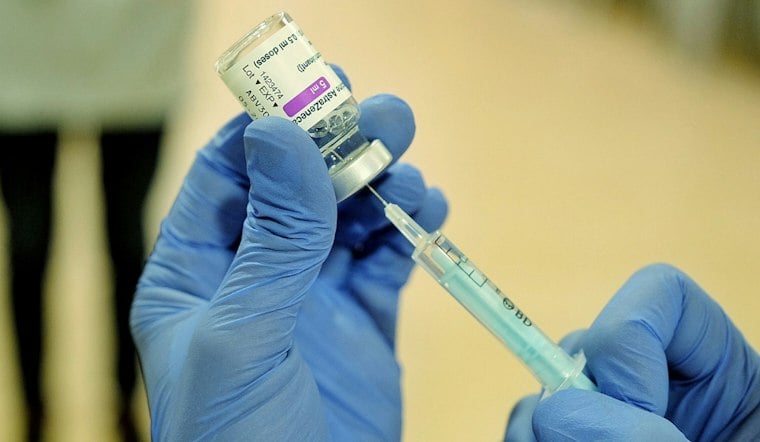
A small vaccine developer with roots in St. Louis's biotech incubator scene is now part of one of the world's biggest pharmaceutical companies. AstraZeneca has acquired Omniose, the Central West End biotech working on vaccines against dangerous bacterial infections, following a three-year exclusive research collaboration between the two companies.
AstraZeneca — a pharmaceutical business based in Cambridge, England — has acquired Omniose, and a purchase price was not disclosed. Omniose's own announcement, relayed by BioSpace, states that the company has become a wholly owned subsidiary within AstraZeneca's Infectious Disease Unit. SRN News, citing Reuters, separately confirmed that financial terms of the deal were not disclosed.
Whatever the precise timing, the acquisition caps a three-year exclusive research partnership between Omniose and AstraZeneca, the kind of arrangement that often precedes a buyout in the biotech world. Omniose specializes in advanced vaccine technologies built around a bioconjugation approach — producing and linking vaccine components within a single cell, as BioSpace's relay of the company's announcement describes it. Fierce Biotech notes that this method simplifies production by coupling the components inside bacterial cells, rather than relying on more complex chemical processes.
Targeting Dangerous Bacteria
Omniose has been developing vaccines aimed at several serious bacterial threats. Its pipeline includes work against Group B Streptococcus, which can cause life-threatening infections in newborns and older adults, as well as Streptococcus pneumoniae, linked to bronchitis, bacterial meningitis and sinus infections. The company has also targeted Klebsiella pneumoniae, a bacterium associated with pneumonia, urinary tract infections and wound infections.
The company’s targets sit within a much larger drug-resistance problem: the CDC’s latest threats report estimates that bacteria and fungi included in its assessment cause 9.7 million infections and 50,800 deaths in the United States each year. That national estimate covers many pathogens beyond Omniose’s vaccine targets, but it helps explain the public-health interest in prevention as well as new treatments. The CDC says its estimates are based on the best available data at the time of each report. The CDC’s current antimicrobial-resistance estimates provide the broader context for the company’s work.
The company connects bacterial antigens to proteins biologically rather than chemically, using what its backers describe as a streamlined manufacturing process. Omniose was started by Mario Feldman and Christian Harding in 2016. Feldman is a molecular microbiology researcher at Washington University, and Harding serves as Omniose's co-founder and chief strategy officer.
Roots In A St. Louis Lab
Omniose's headquarters sit in the Cortex Innovation District in the Central West End, and its origin story runs straight through the city's biotech incubator scene. Feldman and Harding established the company's research operations with BioGenerator Labs, using the lab's bench space and subsidized access to equipment to get the science off the ground. Among Omniose's early backers were BioGenerator and the local nonprofit Arch Grants.
BioGenerator is the startup arm of BioSTL, a local nonprofit focused on growing the region's bioscience economy. It typically takes equity positions in the companies it supports, then returns money from successful exits to the nonprofit and reinvests those returns in the next generation of founders. Jim McCarter is BioGenerator's senior managing director. Per BioSTL, the organization has invested $53 million across 143 St. Louis startups since 2004, funding that mix through $33 million in charitable contributions combined with $20 million in reinvested returns, and more than 200 companies have used its shared lab spaces and equipment.
Omniose's Workforce
Omniose had about 25 employees, most of them scientists, who will now work for AstraZeneca.
Omniose’s vaccine candidates remain at an early stage: the company describes itself as a preclinical biotechnology company, so the acquisition does not mean a vaccine is ready for patients. In the United States, vaccine developers must first complete preclinical work and obtain FDA authorization to begin human testing; candidates then undergo clinical trials, and successful development and manufacturing review are required before a company can seek a biologics license. The FDA’s vaccine-development outline shows the regulatory steps that remain between research and approval.
The acquisition fits into a broader pattern of large pharmaceutical companies buying up bioconjugation specialists. Fierce Biotech notes that GSK acquired similar technology in 2015 through its $190 million takeover of GlycoVaxyn, and that Sanofi paid Johnson & Johnson $175 million upfront in 2023 to co-develop a bioconjugate vaccine — though that partnership stopped in 2025 after interim phase 3 data showed insufficient efficacy.





